Ghostbloods
The Way of KingsThe Ghostbloods are a secretive organization operating behind the visible conflicts of Roshar, and their decisive significance lies in the way they turn isolated mysteries into a connected conspiracy. Jasnah Kholin identifies them as one of the groups searching for the truth about the Parshendi and the possible means of transforming ordinary parshmen into soldiers. The organization is also linked to the attempted assassination of Jasnah Kholin, to Kabsal’s role as an infiltrator, and to the network surrounding Shallan Davar’s stolen Soulcaster and her father’s political ambitions.
Identity and Hidden Reach
Jasnah Kholin presents the Ghostbloods as an organized, purposeful threat rather than a single murderer acting alone. She does not know how many groups are pursuing the same secrets, but she knows of the Ghostbloods with certainty and names them while explaining why she was targeted. Their objective, as far as she can establish, is connected to the Parshendi, the Voidbringers, and the possibility that ordinary parshmen can be changed into soldiers. That goal places the organization at the intersection of scholarship, military power, and existential danger.
The Ghostbloods’ secrecy is reinforced by the limited information available even to Jasnah Kholin. She can identify their name and symbol, but not their full membership or extent. The organization therefore enters the narrative as a distributed presence: its importance is measured less by an openly declared hierarchy than by the recurring traces it leaves in different households, political dealings, and attempted acts of violence.
Symbol, Membership, and Infiltration
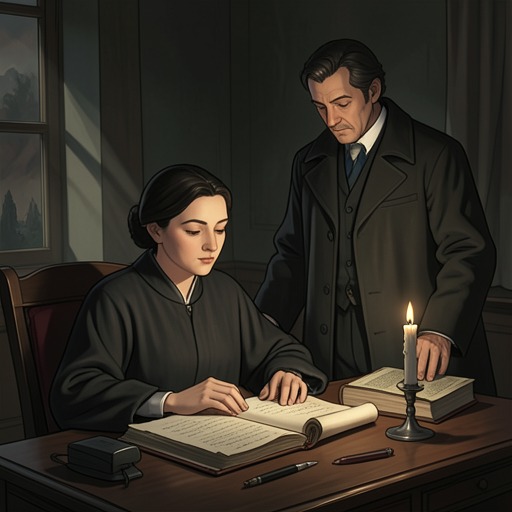
Kabsal is revealed as a Ghostblood after his death. Jasnah Kholin has the organization’s symbol tattooed on the inside of his arm, identifying him as more than the friendly ardent he appeared to be. His association explains the danger surrounding his visits and the attempt to poison Jasnah Kholin with Backbreaker powder dusted over bread. The revelation transforms the poisoning from a private deception into an operation conducted on behalf of a larger group.
The symbol is a pattern of three overlapping diamonds. Shallan Davar recognizes it immediately because it has appeared repeatedly in her own family’s troubles. Nan Balat Davar had shown her the same mark; Luesh, her father’s steward, wore it; and the men who pressured the family to return the Soulcaster bore the same sign. Those men had also financed her father’s attempt to become a highprince. The emblem consequently binds together the theft of Jasnah Kholin’s Soulcaster, the family’s political dealings, and the pressure placed on Shallan Davar’s household.
Shallan Davar’s conclusion that her father may have belonged to the Ghostbloods is not confirmed as a complete account of his membership, but the evidence makes the possibility credible within the narrative. The organization’s influence appears to extend into the family’s finances, its servants, and its dealings with dangerous technology. This uncertainty is itself important: the Ghostbloods are powerful partly because their visible agents can be mistaken for ordinary companions, employees, or benefactors.
Methods and Political Violence
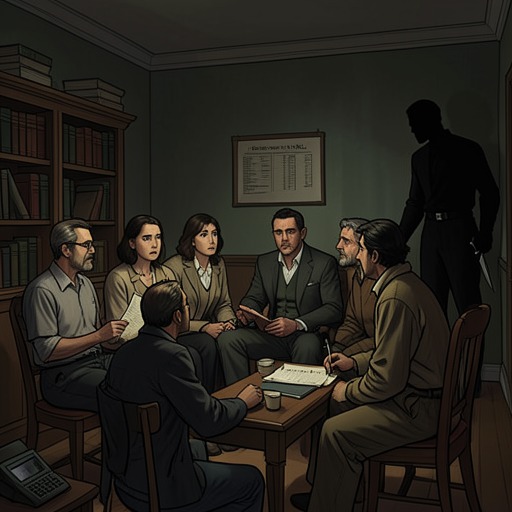
The evidence surrounding the Ghostbloods places them within a broader culture of organized violence. Their known methods include infiltration, poisoning, assassination attempts, symbolic identification, and the pursuit of strategic knowledge. Kabsal’s apparent intimacy with Shallan Davar and access to Jasnah Kholin’s household demonstrate how social trust can become an operational resource. The organization does not need to confront its enemies openly when it can approach them through familiar institutions and personal relationships.
Their pursuit of knowledge is inseparable from power. Jasnah Kholin and Shallan Davar intend to investigate the Shattered Plains to determine whether the Parshendi were once ordinary parshmen and what caused their transformation. Jasnah Kholin fears that another party might discover the answer first and weaponize it. The Ghostbloods therefore represent not merely opposition to Jasnah Kholin’s research but competition over the ability to define the next war’s forces and conditions.
The organization’s activity also mirrors the political systems around it. Elsewhere, highprinces justify the deliberate exposure of bridgemen to Parshendi arrows as an efficient military method, while wounded soldiers are left amid battlefield chaos and political leaders use starvation or withheld pay as punishment. Against that background, the Ghostbloods’ covert violence is not an isolated aberration; it is a secretive extension of a world in which human lives and information are routinely treated as expendable instruments. Their distinctiveness lies in operating beyond the accountability of the army, court, or household.
Connections and Narrative Consequences
The Ghostbloods connect Jasnah Kholin’s intellectual investigation to Shallan Davar’s personal history. Before the organization is named, Shallan Davar’s family crisis, Luesh’s knowledge of the Soulcaster, the pressure to return it, and the financing of her father’s ambitions can appear to be separate problems. The three-diamond mark makes them legible as parts of one network. It also forces Shallan Davar to reconsider the identity of her father and the meaning of the people who surrounded her family.
Their connection to Kabsal similarly changes the interpretation of an apparent friendship. His death is not simply the end of an attempted poisoning; it exposes an institutional affiliation that had been hidden beneath an ordinary social role. Jasnah Kholin’s survival and investigation thus produce a counter-revelation: the failed attack does not end the danger but identifies the organization behind it.
The Ghostbloods also widen the book’s geography and political scale. The search for secrets reaches from Kharbranth and Jasnah Kholin’s scholarly work toward the Shattered Plains and the Parshendi question, while the organization’s traces reach into Jah Keved through Shallan Davar’s family. Their network makes local events part of a contest extending across kingdoms, war zones, and intellectual institutions.
Narrative Function and Significance
As an organization, the Ghostbloods embody the danger of knowledge detached from moral restraint. Jasnah Kholin seeks the origins of the Parshendi in order to prevent another power from exploiting them, yet the same investigation reveals rivals willing to kill for access to the answer. The organization turns research into a battlefield and makes interpretation of history a form of strategic power.
Their partial unveiling also changes the story’s structure. The symbol acts as a recurring visual clue, linking Kabsal, Luesh, the men who pursued the Soulcaster, and the political support surrounding Shallan Davar’s father. What first seems like a collection of private betrayals becomes evidence of coordinated action. The Ghostbloods remain incompletely known, but their name, methods, symbol, and apparent objectives establish them as a durable hidden force whose influence reaches well beyond the scene in which they are first identified.